






Attaya: The Tea Tradition That Unites Gambians Across Generations
By Yunus S Saliu
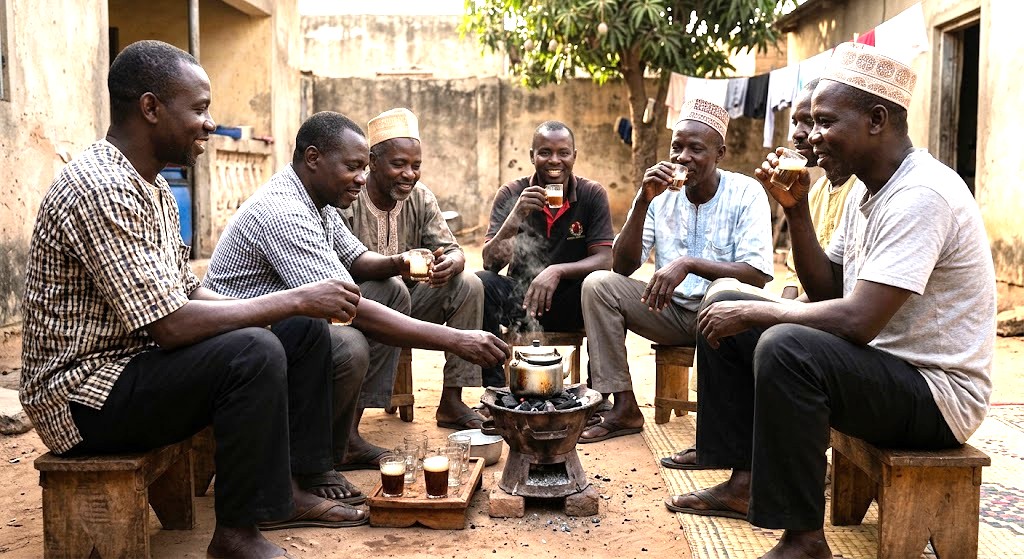
Attaya, the beloved green tea ritual of The Gambia, is far more than a sugary drink brewed in small kettles over a charcoal-burning local stove (barada). It is a cultural custom, an experience woven into the country’s social, historical, and communal fabric. Though the tea itself is imported from China, Senegal, or Mauritania, its preparation and symbolism have become uniquely Gambian.
According to a Gambian historian and curator, Hassoum Ceesay, Attaya should never be reduced to a symbol of idleness, as some critics claim. Instead, it embodies hospitality, community, and traditional values shared across civilizations with rich tea cultures, from Arabs and Ethiopians to Indians and Chinese. Attaya reached The Gambia through North African influences and has since become an integral part of daily life.
One sure thing is that there is no household in The Gambia that you will not find Attaya addicts, though it is not everyone who drinks for one reason or another, because some consider it too strong for them, some claim it does not allow them to sleep, and so on.
Some addicts claim that if they don’t drink Attaya in a day, they will fall sick or have a headache, while some say they will not be active, and a few others say they will be lazy until they are served.
The brewing of Attaya is almost ritualistic, beginning with getting charcoal, arranging benches, and assembling the kettle and cooking pot called ‘barada’, sugar, mint, and a tray with two signature small glass cups called ‘kass.’ As the tea boils, people naturally gather, drawn by conversation, companionship, and the magnetic pull Attaya seems to possess. “Nobody drinks Attaya alone,” the historian joked, noting the superstition that even in isolation, someone will appear before the last round is served.
Beyond its social value, Attaya carries economic importance through import taxes and local commerce. Its meticulous brewing, often perfected over years, is considered an art form, one with the potential to become a tourist attraction.
From myths about sleeplessness and medicinal benefits to the deep trust of sharing one cup among many, Attaya mirrors the warmth and unity of Gambian life. It is not merely a drink; it is a symbol of identity, togetherness, and the enduring spirit of community.
It is worth knowing that the social significance is tied to the tradition of its three rounds, because each round comes with its own flavour or taste, which a good drinker can quickly identify for you.
As disclosed, the taste of the first round is strong and bitter, and it is considered the strongest brew, which Gambians or drinkers will call ‘first-kass.’ In the early morning, some people cannot drink this on an empty stomach, or without the taste of food
The second round is known as ‘second-kass,’ and it is balanced in taste because the sugar content increases and is revealed in the taste, and the bitterness mellows.
The last round, which is the third round, is the lightest and sweetest of the rounds. To make it tastier, the brewer enhances it with additional mint. Some people also like this round three, especially fresher drinkers who join in drinking Attaya. It is from this third round that some tourists or visitors learn the knowledge and skill of drinking Attaya.
As mentioned, the brewing of Attaya is an art that requires skill, especially when you are brewing for many people to drink. The Attaya Master must process the technique of pouring into the glass cup for turning/mixing because it is not just about pouring it, but the skill of pouring from a great height, for the gathering to see and admire. This makes the throat-watering, thus as Attaya Master turns it up and down with the ‘kass’, it creates an amount of froth that attracts drinkers who will be throwing some funny words in their debates or arguments. The remarks from them are another enjoyable aspect of gathering to drink Attaya.
In a remark of one of the Attaya addicts, “The amount and consistency of the froth are a mark of the brewer’s skill and the quality of the tea. The froth traps the steam and concentrates the aroma, enhancing the flavor when sipped. This meticulous attention to detail elevates the experience from casual drinking to a shared cultural performance.”
Anyway, this act of sharing from the small kettle pot among many is a profound gesture of unity, health, and mutual trust that reinforces social bonds more effectively than any formal agreement.