

NCAC’s Cultural Renaissance: 2025 Repositioned Gambian Heritage at Home and Abroad
By Yunus S Saliu
As The Gambia closed the chapter on 2025, the year will be remembered as one of renewed momentum for arts, culture, and heritage preservation. From safeguarding endangered traditions in rural communities to projecting Gambian creativity onto global stages, the National Centre for Arts and Culture (NCAC) recorded milestones that reinforced culture as both a national identity and a development tool.
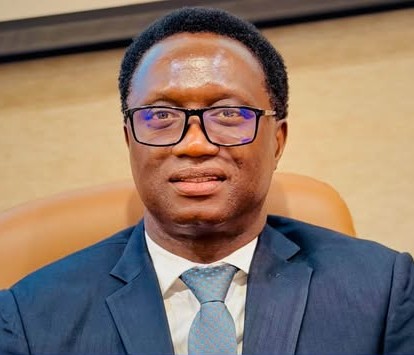
In an exclusive year-in-review interview, NCAC Director General Hassoum Ceesay described 2025 as a year that “consolidated progress and laid strong foundations” for the future of Gambian culture under the Ministry of Tourism, Arts and Culture (MOTAC).
Safeguarding Living Traditions
One of NCAC’s most significant achievements in 2025 was The Gambia’s success under the UNESCO 2005 Convention on the Protection and Promotion of the Diversity of Cultural Expressions. The country emerged as one of only three African nations to benefit from UNESCO’s International Assistance Programme for inventorying intangible cultural heritage.
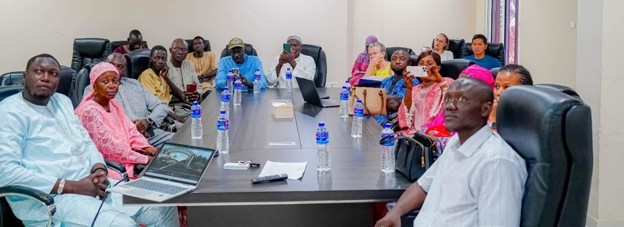
Through the initiative, 30 communities in the Central River Region (CRR) will document 90 elements of their living heritage, including rituals, ceremonies, healing practices, food traditions, and performances. According to DG Ceesay, this is a landmark step.
“For heritage to be protected, it must first be identified and documented,” he explained. “This project will give The Gambia, for the first time, a master inventory of its intangible cultural heritage.”
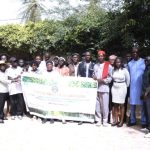
Community consultations and workshops began in 2025, with full fieldwork set to continue in 2026.
Gambian Artists on the World Stage
Artist mobility was another defining feature of the year. NCAC intensified efforts to ensure Gambian creatives showcased the nation’s cultural richness abroad, a key obligation under UNESCO conventions.
In 2025, Gambian artists performed in Algeria at the Creative Arts Nexus organised by Afreximbank, in the United Kingdom at the Yaram Arts Festival, in Senegal during the ECOWAS-supported ECOFEST, and in the People’s Republic of China, where a full cultural delegation strengthened bilateral relations through performance and exchange.
“These performances change the narrative about The Gambia,” Ceesay noted. “They promote us as a country with a rich history, vibrant creativity, and strong cultural identity, while also boosting tourism and cultural diplomacy.”
Several artists also independently toured Europe and the United States, supported by NCAC through official attestations facilitating visa processes.
Festivals, Freedom, and Cultural Rights
At home, 2025 witnessed a surge in community-driven cultural festivals, which NCAC views as a sign of growing artistic freedom and cultural rights.
Highlights included film festivals organised by Gambian filmmakers, the inaugural Kunta Kinteh Cultural Week and Book Fair, and numerous village and town festivals nationwide, such as Janjanbureh Kankurang and Masks Festival, Kansala International Cultural Festival, and Banjul Cultural Festival. The celebrations peaked during The Gambia’s Diamond Jubilee, marking the country’s 60 years of independence, where NCAC mobilised artists from across the country to deliver a distinctly Gambian cultural spectacle.
“These festivals show that culture is alive at the grassroots,” said Ceesay. “They are a reflection of freedom of expression and community ownership of heritage.”
Heritage Sites: Progress and Perils
In museums and monuments, notable progress was made despite persistent challenges. Under the Tourism Resilience Project, studies and designs were completed to protect Kunta Kinteh Island from erosion, including improved access via a jetty and enhanced heritage sites on the mainland, such as Maurel Frères, CFAO, and San Domingo buildings.
The government-funded facelift of the Mungo Park Memorial Obelisk was completed in 2025, transforming it into a fully serviced heritage site with fencing, water supply, visitor facilities, and a planned site museum.
Meanwhile, NCAC’s digitised oral archives and libraries recorded increased use by Gambian and international researchers, students, and scholars.
However, the Director General acknowledged threats to heritage sites located in remote areas, particularly bushfires. In response, NCAC worked closely with communities in 2025 to establish fire belts around vulnerable sites like the Wassu Stone Circles, a strategy to be expanded nationwide in 2026.
Funding, Partnerships And Capacity Building
Despite financial constraints, NCAC benefited from targeted government and partner support. The Ministry backed the revamped Banjul New Year Cultural Festival, which in 2025 adopted a more inclusive, better-organised and safer format. EU-supported projects also provided water supply to heritage sites and funded a 10-day training programme for 30 emerging musicians, covering copyright, financial management, branding, and performance skills.
Capacity building extended internally as well. More than 25 NCAC staff attended international trainings in Senegal, Turkey, China, and beyond, covering underwater heritage management, museum studies, performing arts, and intangible cultural heritage.
“These trainings have transformed our outlook and boosted staff morale,” Ceesay said. “They bring new methods and global best practices into our work.”
The year also saw the opening of the Yunus Emre Cultural Institute in Senegambia, where NCAC played a key role. The institute now offers exhibition and performance spaces for Gambian artists while promoting cross-cultural dialogue.
Looking Ahead to 2026.
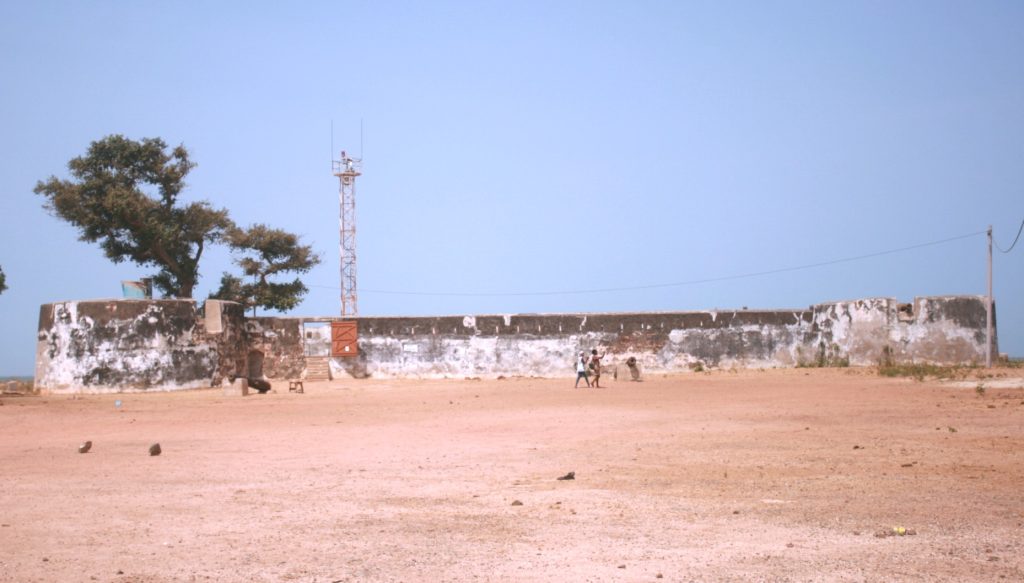
As NCAC turns to 2026, priorities include mounting new exhibitions at Fort Bullen and the Mungo Park Memorial, commencing fieldwork for the CRR intangible heritage inventory, and expanding support for community festivals using the successful “Banjul model” of coordination, security, and fundraising.
Another major project on the horizon is the Sir Dawda Kairaba Jawara Mausoleum. Once handed over to MOTAC, NCAC will oversee the technical work of mounting a museum exhibition chronicling the life and legacy of The Gambia’s founding president.
“This is a national heritage project,” Ceesay stressed. “It will tell the story of Sir Dawda Jawara through objects, documents, vehicles, and personal effects for generations to come.”
As 2025 fades into history, NCAC’s work has reaffirmed that culture is not merely a reflection of the past, but a living force shaping The Gambia’s future, locally rooted, globally connected, and increasingly resilient.