


From Abuse In Iraq To Hope At Home: Stephanie Nkrumah’s Painful Journey to Freedom
By Yunus S Saliu
For Stephanie Nkrumah, travelling to Iraq in search of greener pastures was an opportunity to improve her life through domestic work. But what began as a journey in pursuit of employment turned into a distressing experience of abuse, humiliation, and suffering, leaving her in need of medical attention and protection.
Her ordeal, which was captured in a video that subsequently went viral, exposed the harsh reality faced by some migrant domestic workers, particularly women who leave their homes in search of better opportunities abroad.
In the video, a man is seen assaulting Stephanie, sparking widespread concern and condemnation over her treatment and the conditions under which some foreign domestic workers operate.
After the incident, Stephanie has returned safely to Ghana, where her experience has attracted the attention of the country’s government and renewed calls for accountability and stronger protection for citizens working abroad.
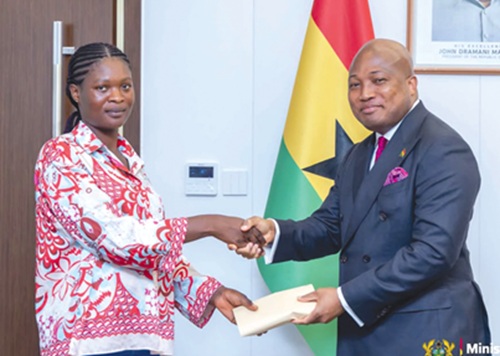
Recounting her experience during a meeting with Ghana’s Minister of Foreign Affairs, Samuel Okudzeto Ablakwa, and members of her family at the Ministry of Foreign Affairs in Accra on Monday, November 23, 2026, Stephanie described how her health problems became the beginning of a nightmare.
She said she became seriously ill while working as a domestic worker in a private household in Iraq. However, rather than receiving the proper medical attention she needed, she was taken to the office of her recruitment agency, where she was allegedly subjected to a brutal assault.
According to her account, her boss, whom she identified as a staff member of the agency responsible for receiving foreign workers upon their arrival in Iraq, ordered the beating after she complained about her illness.
The situation, she said, became even more frightening when her boss allegedly threatened her with a gun.
“They even pointed a gun at me. He said if I don’t work, they will beat me,” she recounted.
Her suffering did not end with the beating. Stephanie said she was taken back home and later to another hospital, but she was not allowed to communicate directly with the doctor about her medical condition.
“They will not let the doctor talk to you directly. They will talk to the doctor. So, the doctor won’t ask you what is wrong,” she explained.
She said she was prescribed medication, which she took for 30 days, before another doctor subsequently examined it and informed her that it was not the appropriate medicine for her condition.
For Stephanie, the video of the assault became crucial evidence of what had happened to her, particularly after those she accused reportedly denied the incident.
Her eventual escape from the situation brought an end to her immediate ordeal. She reportedly managed to leave after her employers handed over her passport during a work-related trip to another city, creating an opportunity for her to return home.
Back in Ghana, however, her experience has become more than a personal account of suffering. It has prompted government intervention, diplomatic action and renewed attention to the welfare of Ghanaian nationals employed abroad.
Receiving Stephanie and her family, Foreign Affairs Minister Ablakwa condemned the treatment she endured and insisted that the individual captured in the viral video must be identified, apprehended, and brought to justice.
He disclosed that Ghana would formally protest to the Iraqi authorities, stressing the importance of gathering specific details about the household, recruitment agency, and individuals involved to support the country’s diplomatic action.
“The man captured in the video, who was engaged in all of that assault and battery and dehumanising, degrading treatment of our dear sister, must be identified, apprehended and brought to justice,” he said.
Beyond seeking justice, the minister said the government was equally concerned about Stephanie’s physical and psychological recovery. He disclosed that medical doctors and psychologists had been put on standby to provide her with the necessary care.
He also announced a donation of GH¢50,000 to support her, with the money intended to help her establish a business and become economically empowered. An education scholarship was also pledged as part of efforts to support her future.
Ablakwa said the government wanted to ensure that Stephanie received the assistance and opportunities needed to rebuild her life without having to travel abroad again in search of employment under difficult circumstances.
“There are opportunities in Ghana. Ghana is not that bad; it’s just that sometimes you need somebody to assist you and point you in the right direction,” he said.
The government has also indicated that it is considering measures to restrict the recruitment of domestic workers for employment in Iraq.
Stephanie’s experience highlights the vulnerability of migrant domestic workers and the importance of ensuring that recruitment arrangements, working conditions and the protection of workers’ rights receive adequate attention.
For many women, travelling abroad for domestic work represents an opportunity to support their families and build a better future. But when employment opportunities are not accompanied by adequate protection, access to healthcare and mechanisms for reporting abuse, the dream of a better life can quickly become a painful struggle for survival.
For Stephanie, returning home marks an important new beginning. While the pursuit of justice and recovery continues, the support offered by her government presents an opportunity to rebuild her life with dignity, security and renewed hope.
Her story is also a reminder that behind every migrant worker seeking a better life abroad is a human being whose safety, dignity and fundamental rights must never be compromised.