



NCAC Brings History To Forefront Of Gambia-Senegal Border Demarcation
By Yunus S Saliu
The National Centre for Arts and Culture (NCAC) has emerged as an important contributor to the ongoing national effort to clearly demarcate the Gambia-Senegal border, bringing historical records and archival evidence to bear on the process.
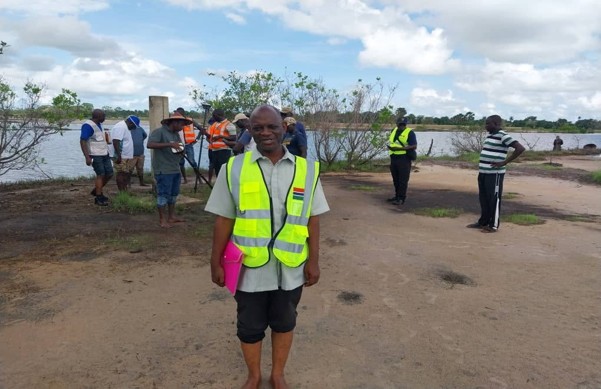
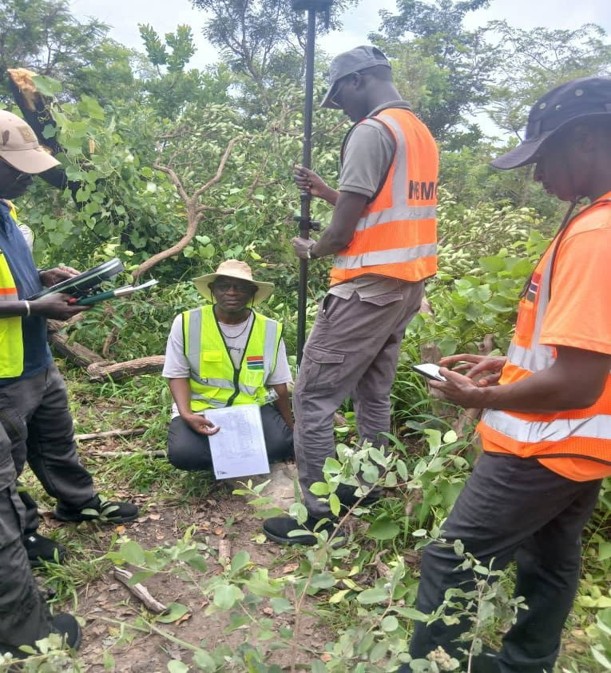
The border demarcation exercise, which commenced on August 15, is part of ongoing efforts by The Gambia and Senegal to reaffirm their common international boundary and strengthen cooperation between the two neighboring countries.
At the centre of the NCAC’s contribution is its Director General, Hassoum Ceesay, ORG, FBA, whose expertise as a historian and documentalist is being utilized to support the exercise.
DG Ceesay is providing historical and documentary assistance by examining archival materials, particularly historical maps and other records that could help the technical teams identify and understand the locations of boundaries established during the colonial period.
The NCAC’s involvement underscores the practical importance of history and archival documentation in contemporary nation-building. Beyond preserving the country’s cultural heritage, historical records can provide critical evidence in addressing present-day national questions, including territorial boundaries.
The Gambia-Senegal boundary has its origins in agreements reached between Britain and France during the colonial era. Consequently, historical maps, official documents and other archival materials remain important sources for understanding the evolution and precise location of the boundary.
The use of such materials in the current exercise demonstrates the relevance of the NCAC’s mandate beyond museums, monuments and cultural preservation. It shows how historical knowledge can directly contribute to safeguarding national interests and strengthening the country’s territorial integrity.
For The Gambia, clearly defined and mutually recognised borders are essential to national sovereignty, peaceful relations with neighbouring countries and the orderly administration of border communities.
The exercise is also significant for communities living along the frontier, where clearly established boundaries can help reduce uncertainty over land, movement and other cross-border activities.
The NCAC’s role therefore represents a convergence of history, documentation and national development. By placing archival evidence at the service of the border demarcation process, the Centre shows how preserving the past can help address important challenges in the present.
The ongoing exercise further reinforces the value of investing in the preservation, digitisation and accessibility of The Gambia’s historical archives. Such records, often preserved for generations, can become indispensable national resources when questions concerning the country’s history, territory and identity arise.
The NCAC’s participation in the border exercise ultimately highlights a broader principle: history is not merely a record of the past; when properly preserved and applied, it can be an important instrument for protecting national interests and building a stronger and more clearly defined nation.