



The Dying Craft: Blacksmithing Needs Youth To Keep A Timeless Tradition Alive In The Gambia
By Yunus S Saliu
Blacksmithing is one of the oldest professions in The Gambia and across West Africa, but waning interest among the youth is causing it to fade from society. Many young people today believe it is not a fast path to wealth.
Despite the fact that most practitioners inherited the craft from their fathers or forefathers, blacksmithing is becoming a dying profession. It needs more young people with creativity to sustain it. Instead, many youths see it as work for the elderly and believe it cannot provide financial success. It is surprising to see young people lament unemployment while blacksmithing forges remain unattended.
This situation is not entirely their fault. Blacksmithing receives little to no government attention or support from public or private entities. Some people, especially the wealthy, even look down on young blacksmiths, dismissing the craft as lacking ambition or economic potential.
Older blacksmiths, however, take great pride in their work. It provides them with a stable livelihood enough to build houses, marry, raise families, and educate their children.
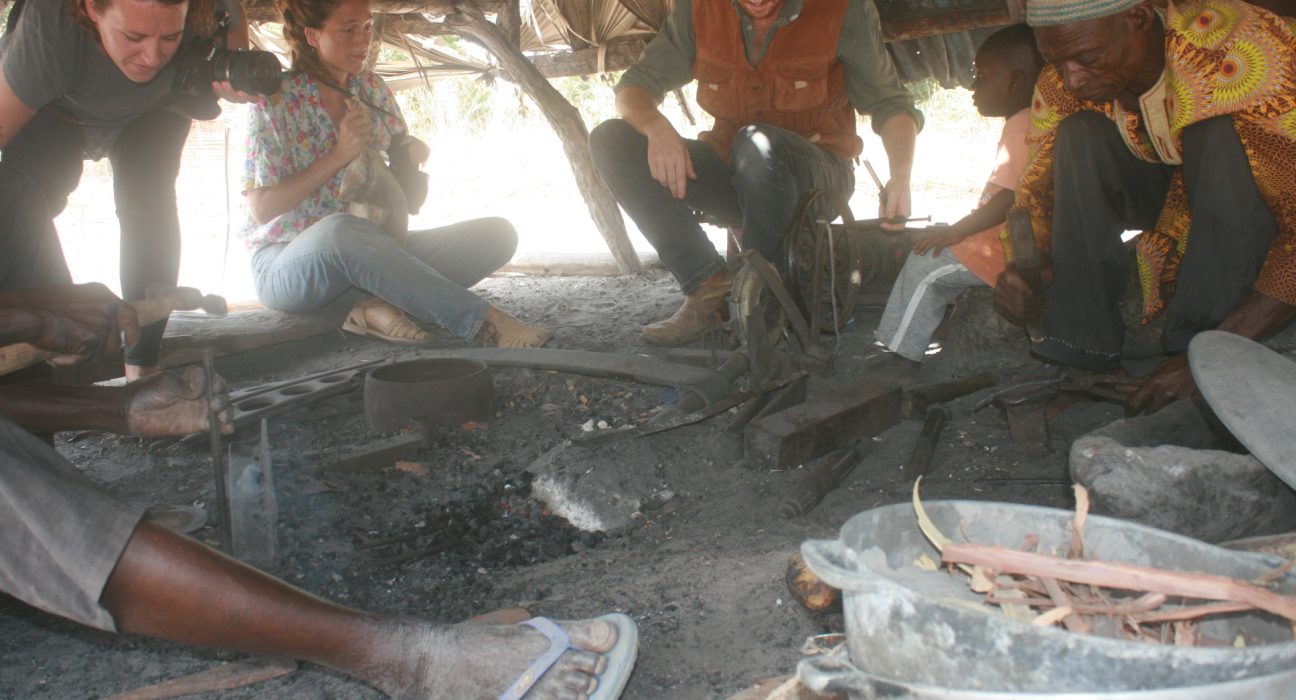
During a domestic tour, I visited a blacksmith in Ndemba, Foni, West Coast Region, an elderly man in his 60s. “I learnt and inherited this from my father,” he said proudly. He enjoys his work and welcomes visitors, especially tourists who stop by his forge.
The craft is deeply rooted in tradition. He explained that a smithy is not an ordinary place. If someone forgets an item there, it will remain untouched until they return. Anyone who dares take what is not theirs risks “the wrath of the smithy,” believed to manifest as sickness unless the stolen item is returned.
Even the water used in the forge, where metals are cooled, is believed to have healing properties and sometimes serves as an additional source of income.
Before the advent of Islam and Christianity, blacksmiths observed several ancestral traditions. Today, many of these customs have faded due to religious influences.
The blacksmith expressed hope for more youth participation, but said the craft must first become more attractive and lucrative. “This cannot happen without modern orientation and support from the government,” he stressed. Empowering blacksmiths and young learners would reduce reliance on primitive methods.
For newcomers, learning the craft typically takes between two and three years. Within blacksmithing families, however, there is no formal training; children learn naturally by spending time in the smithy, blowing bellows, hammering iron, and eventually creating items.
Most of the tools used at the smithy are locally made, including bellows for blowing air, anvils, hammers, tongs, chisels, and punches. Palm kernel shells are used to fuel the fire. These locally sourced tools are economical compared to modern equipment.
Blacksmithing remains a vital cultural heritage and a potential economic avenue, one that can thrive again if supported, modernized, and embraced by the youth.