



Unforgettable Intangible Cultural Heritage Training

By Rohey L Ceesay
One of the most memorable trainings I attended in recent times is the Intangible Cultural Heritage (ICH) training workshop organized by the National Centre for Arts and Culture (NCAC), funded by the UNESCO Dakar office.
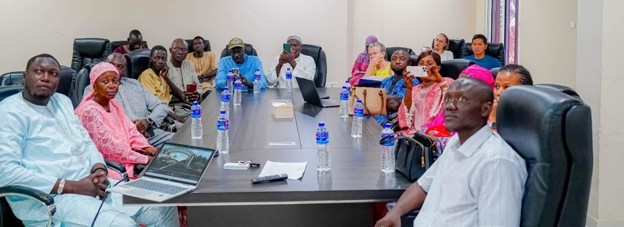
This remarkable training workshop about safeguarding our Intangible Cultural Heritage (ICH) started in July 2022 when I joined selected stakeholders comprising government officials, members of civil society, organizations, and different ICH focal persons to attend.
As the youngest participant in the training, I met Anna Ruiz from UNESCO and two friendly and competent ICH experts – Emily Drani and Gankhanani Moffat Moyo, whose way of socialisation and tolerance impressed me.
Following this exceptional training, I registered my interest in becoming one of the ICH experts in The Gambia, though I was skeptical at the beginning because of my age, 21, and as the youngest among lots of the trainees I thought I might not be chosen but Anna encouraged me and made me understand the importance of the younger people when it comes to preservation and safeguarding of the ICH.
Yes, I made it; I was selected as one of the 9 ICH support facilitators in The Gambia. This was a great experience for me, and today I wish to share with the world my experience on the importance of safeguarding ICH in The Gambia, and my journey through the inventory.
Intangible Cultural Heritage is cultural heritage that cannot be touched or seen but can be felt. You can also call them untouchable heritages: the hands cannot touch, but the body can feel it while the mind understands; they are deep heritages.
In local Gambia languages: In Mandinka we interpret it as ‘Tarakou kotoo mengte maala ning buloola,’ Wollof – ‘Adam aka chosan bungai yekh y munlooko lala aka Saye looho,’ Fula: ‘Adda Donaado mbo memotaaako.’
Jola: Safeguarding in Mandinka language means ‘Tarakou kotoo tankanya/Mara nyaa,’ Wollof: ‘Watu ak Arr,’ Fula: ‘Dandugol,’ and in Jola it is ‘Kapulyehk’
Many years ago, the ICH of The Gambia was so widely practiced by the communities that they found their ancestors practicing it. They know about its value in their daily lives because it is a living heritage. Men and women are actively involved, and the children are taught for continuity, which means elders should not die with the knowledge of the ICH; this allows the young ones to be engaged in safeguarding it.
However, it is a changing story nowadays; most of the parents of this generation are not even practicing some of these cultures, let alone transmitting or transferring them to their children for the next generation to inherit.
Safeguarding ICH is important because it is someone’s identity. It will enable the younger generation to have an idea about their culture and heritage. It will promote peaceful coexistence among different cultures within the ethnic groups in the country. This is because it encourages learning from each other and living in peace, unity, and harmony in the communities irrespective of ethnic background.
Inventory of the ICH elements across the nook and crannies of The Gambia was another opportunity for me to learn more about my country. The supporting facilitators team was led by the Gambia ICH focal person, Sanna B Jarju of NCAC.
It was a big opportunity for me. I learned different things from the communities visited, especially about ICH elements in The Gambia, which include elements that are medicine and so on.
Some ICH elements provide clothing to the people of the community through the skills involved; other ICH elements teach the children about societal ethics, norms, and values. Some elements provide income to those who practice them, which is used to pay school fees for their children, according to the community people who are still practicing them. Even some elements are also useful for feeding, which includes food gathering, processing, and preservation, a link to the eradication of hunger under the Sustainable Development Goals. I have seen an ICH element that is important in building peace among different communities and tribes. Even religious ones, because the element brings people together to unite and live as one in harmony, peace, and tolerance.
The Gambia has very beautiful tangible and intangible cultural heritages.
Meanwhile, modern heritage is one threat to the safeguarding of ICH because people are more glued to technology, and it is limiting the focus of the people, especially the young people, who now have less time to study and conduct meaningful research on culture and heritage.
Making ICH a memorable matter and safeguarding it by creating awareness about it through reading and posting some of the elements to your public forum and sharing your knowledge about it is very important.
ICH is a living heritage, so transmission is vital; the young should be involved for the living heritage to be safeguarded.