

Imam Sait Matty Tomb: Most Visited Tomb In Destination Gambia
By Yunus S Saliu
One of the most visited Senegambia jihadist tombs in The Gambia is the Imam Sait Matty Bah Tomb in Bakau. It is built at the former Sunswing Hotel, now Sun Beach Hotel in Cape Point, Bakau.
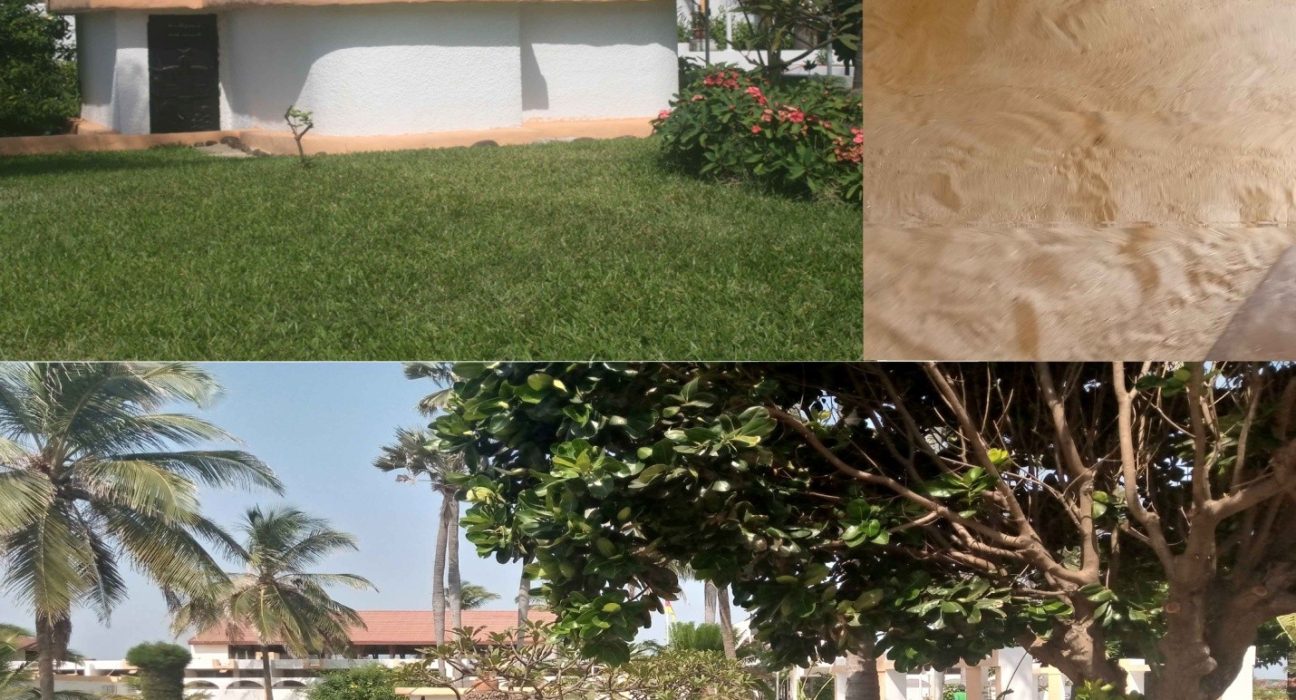
The tomb, built over a century ago, is about a six-meter walk from the gate of the hotel to the tomb. From the gate, you will directly see the tomb painted in white colour, with a light brown strip at the top and bottom sides of the tomb, with a walking lane to the only carved wooden door painted black. The door is always closed, not locked, but open for any visitor to enter inside.
Inside the tomb is a bumpy sand area of less than two meters in length, indicating the point where the body is laid; there is a prayer mat and the Qur’an, a bunch of short brooms, and a pot to burn incense while inside, too, all painted white.
Meanwhile, in the front view of the tomb, a plaque and trees were given in honour of Imam Sait Matty Bah by Mustafa Bittaye, the general contractor for the then Sunswing Hotel.
Sait Matty Bah’s tomb receives more visitors than any other jihadist tombs in The Gambia. Most of the tourists or visitors who check into the hotel do find time to have a glance, while some take pictures of this beautiful and well-kept tomb.
The Tomb is not just for visiting or photography alone, but some people come around or visit there to make some supplications because Sait Matty is not just an Imam, Jihadist of his time, but also a marabout.
However, Imam Sait Matty Bah was the son of Almami Maba Jahu Bah, who was one of the great Jihadists, a King and Imam in Sine Saloum.
Historians recorded that he came to settle in The Gambia around the beginning of the 20th century and was a devout and staunch follower of Islam with lots of followers, mainly Wollofs which majority of them migrated with him to The Gambia. He was the father of former Imam Alhaji Waka Bah, the father of one of the former Imams of Bathurst – Alhaji Ahmad Lamin Bah.
According to Hassoum Ceesay, historian and Director General of the National Centre for Arts and Culture (NCAC), Imam Sait Matty, the son of Almami Maba, who was one of the great Muslim jihadists and reformers of the Senegambia region credited with spreading of Islam in large parts of Senegambia. This included the region today called Sine, Saloum, and Badibou. “He did this until the French knew that if they really wanted to complete their colonial-designed project of colonizing, they had to deal with him in one way or another,” he stated.
In 1867, he continued in his narration, the French attacked Maba Jahu Bah, and he lost his life in the Battle of Somb, now in the present day at the Republic of Senegal, and before his death he had already planted the seed of Islam in large parts of Senegal and The Gambia.
More importantly, Maba Jahu Bah had a son who was also a warrior: “When Maba Jahu was killed, the son, Mamoud Nderry Bah, took up the mantle to continue from where the father had stopped. And he did this for over 20 years, but another son of Maba Jahu, Sait Matty, born in 1855, was interested in reforming and converting some people, particularly in the Badibou. Sait Matty’s interest gave way to confrontation with his brother, Mamoud Nderry.”
History indicates that Mamoud Nderry and Sait Matty were two brothers with rivalry between them, and the British also played an important part in dividing them; they were giving Sait Matty arms and gunpowder, which were used against his brother; hence they did not want unity among them. The British feared that if the two were united, they would conquer Bathurst, a British colony.”
The British plan worked; Sait Matty became a very strong opponent of Mamoud Nderry and fought several battles in present-day Badibou, and some of Sait Matty’s warriors were forced to cross the river, such as the South Bank of the River Gambia.
“Finally, in 1893 he lost a battle and fled with his ‘talibe’ (disciples). Some of his warriors were disarmed by the British and allowed to settle in Bathurst, but because Bathurst was too tight for him and his entourage but was taken care of by the Alkalo of Bakau, where he had a house and home to settle down in Bakau Kunku, where he lived until his time in 1897 and was buried in Bakau,” he explained.
However, a street was named after Sait Matty in Bakau, and his descendants can be found in Senegal and The Gambia, proud of his legacy as an Islamist, reformer, and diplomat who was able to balance his self-interest to get arms and weapons from the British and able to fight his wars, and also maintain a good relationship with the British to live an independent life.
Till today, all his descendants have their annual Gamo, a family reunion in both The Gambia and Senegal, and work together to make the family reunion stronger.