


Janjangbureh Kankurang Festival At A Glance: A Celebration of Living Heritage
By Yunus S Saliu
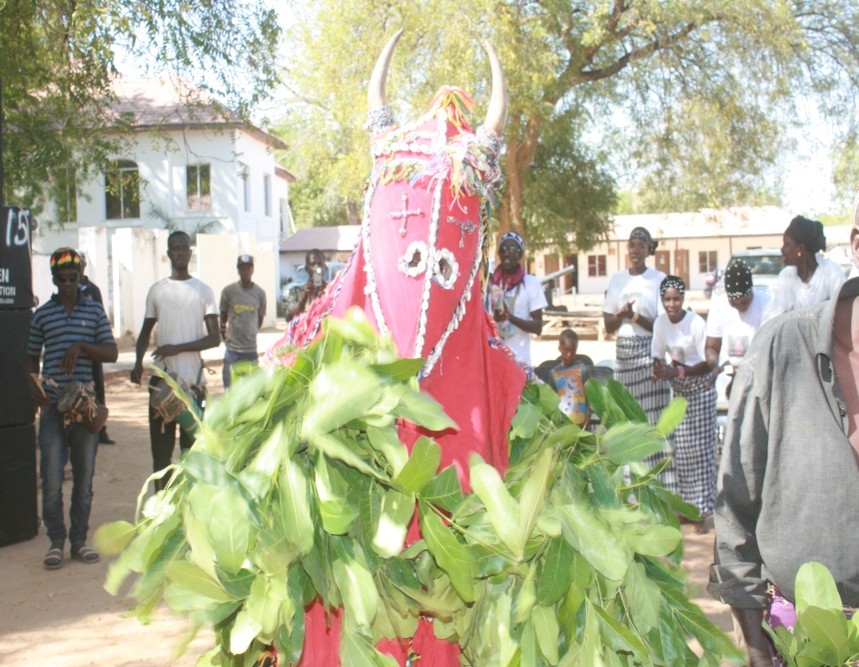
As a new year begins, lovers of culture, tradition and heritage turn their attention to one of Destination Gambia’s most celebrated revived cultural festivals, the Janjangbureh Kankurang and Mask Festival, held on Janjangbureh Island in the Central River Region.
The festival has grown into an important cultural gathering, attracting Gambians, visitors from neighbouring countries and international tourists interested in experiencing the country’s rich traditions and living heritage.
The revival of the Janjangbureh Kankurang Festival was supported by the Youth Empowerment Project (YEP), in collaboration with key tourism and cultural institutions, including the Gambia Tourism Board (GTBoard), the National Centre for Arts and Culture (NCAC) and the Association of Small Scale Enterprises in Tourism (ASSET). The first edition of the revived festival was held in January 2018.
Since its successful revival, the festival has continued to gain prominence both within The Gambia and across the sub-region. Participants and visitors have travelled from countries including Senegal, Mali and Guinea-Bissau, alongside tourists from other parts of the world.
Each edition has sought to build on the previous one, bringing together traditional masquerades, cultural performances, music, historical tours and community-based tourism activities.
A Festival Of Culture And Masquerades
Every edition is set to offer visitors an extensive programme celebrating the Kankurang and other forms of traditional masquerade.
Activities usually begin on the eve of the official opening with the Jambajabally Kankurang dance.
Following the official opening on Friday, participants and visitors will have the opportunity to embark on historical and cultural tours during the day. The evening will feature a colourful parade of different Kankurangs and masquerades, followed by a musical show featuring popular local and international DJs and artistes.
The second day promises another major attraction, with a full procession of Kankurangs and other masquerades from different parts of The Gambia. The day will culminate in another spectacular Kankurang performance.
The third and final day will combine cultural celebration with environmental and community-based activities, cultural performances, and community-based tourism activities.
The festival will conclude with a musical concert featuring one of The Gambia’s popular musicians.
Kankurang: More Than A Masquerade
In The Gambia, the Kankurang is among the most important traditional masquerades. It appears not only at community and individual ceremonies but also at official cultural functions.
Across the Senegambia region, the Kankurang is widely recognised and respected for its perceived spiritual power. Among the Mandinka in particular, it is traditionally regarded as a spirit that protects initiates and the wider community from evil forces and witchcraft during initiation ceremonies.
The masquerade also plays an important social role by helping to enforce discipline within the community.
Historical accounts provide evidence of the presence of masquerade traditions in the region for centuries. Explorer Mungo Park, who travelled through West Africa in the late eighteenth century, referred to a masquerade known as Mamoo Jumbo in his writings. Mamoo is considered one of the forms of Kankurang and was traditionally associated with dispensing justice and driving away evil spirits.
Tracing The Origins Of Kankurang
According to oral narratives, the Kankurang originated from Kaabu, the westernmost extension of the Manding Empire, which developed in the Senegambia region following the decline of the Mali Empire and the rise of Songhai further east.
The expansion of Manding traders from the Mali region into Senegambia around the 16th and 17th centuries is believed to have brought with it the influence of secret societies and power associations associated with Mande culture.
According to Hassoum Ceesay, Director General of the National Centre for Arts and Culture and a historian, these traders are also believed to have travelled with artisans skilled in different crafts, as well as griots who preserved and transmitted histories and cultural practices, including masquerade traditions.
Oral sources further maintain that the Kankurang is a modified form of ancient Malian masks brought by the Nyamakala, a social group renowned for specialist knowledge, particularly in smithing and other crafts.
The Nyamakala were also traditionally associated with spiritual and occult powers and were believed to possess the ability to communicate with spirits. They played an influential role in traditional society, including in important rites of passage marking the transition from childhood to adulthood.
Different Types Of Kankurang
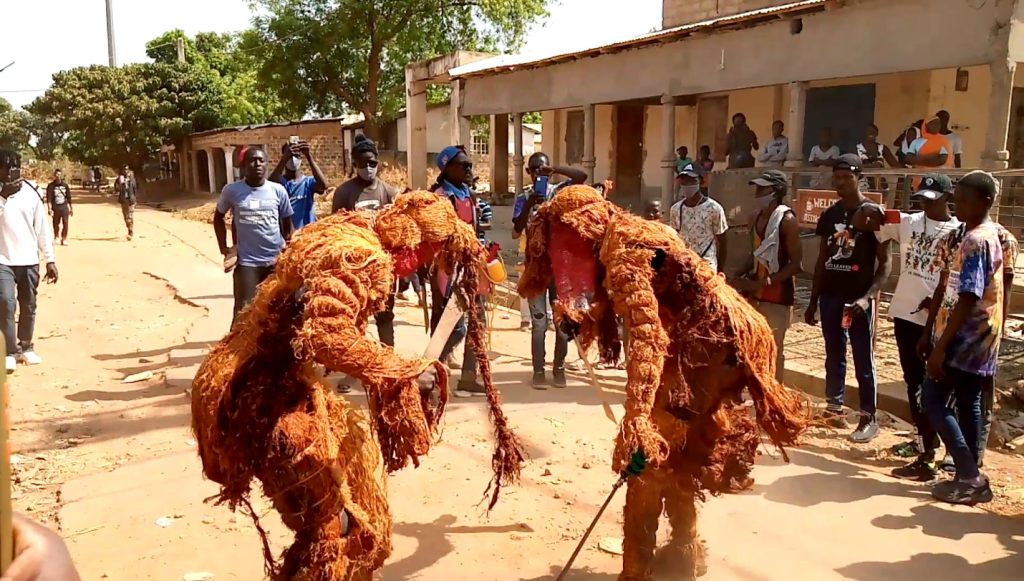
The Kankurang is not a single type of masquerade. It represents a family of Mandinka masquerade traditions whose appearance, costume, and functions vary according to type and locality.
Generally, Kankurangs are covered from the head to the mid-calf or from head to toe with bark, leaves, or a combination of bark and leaves. The costume conceals the identity of the person inside and is traditionally believed to give the masquerade supernatural or spiritual power.
The functions of the Kankurang vary according to type, but they are generally associated with the spirit world, known as Furulung, a male-dominated spiritual realm from which women and uncircumcised youths are traditionally excluded.
Among the notable types are:
Jamba Kankurang:
The Jamba Kankurang is one of the most common types found in Janjangbureh and is now seen in many parts of The Gambia.
It is dressed in green mahogany leaves, while the upper part of the body is neatly wrapped in bark known as jaffo. The exposed face, forearms, and legs are usually painted with mud.
Faraakankurang
The Faraakankurang, also known as Wuleng-wulengo and sometimes referred to as the mythical Ifangbondi, is another important type.
Its costume is made from shredded bark of the camel-foot tree, a piece of which the wearer also continuously chews.
The Faraakankurang is traditionally associated with circumcision periods and emergencies in the community, including cases of suspected food poisoning or killings. Its principal functions are to enforce discipline and drive away evil spirits and witches. Traditionally, when the Faraakankurang is out, women are not permitted to venture outside.
This type of Kankurang is particularly associated with the Fulladu West District of the Central River Region.
Jambajabally
The Jambajabally is particularly common in the Jimara and Wuli districts of the Upper River Region, although it can also be found in Niani District in the Central River Region. The name Jambajabally is understood to mean “a leaf that never dries,” reflecting the nature and purpose of the masquerade.
Unlike some other Kankurangs, the Jambajabally usually comes out for a specific and often short-term purpose, such as delivering a message to the community or helping to settle disputes between age-sets.
It is dressed entirely in green mahogany leaves and performs with accompanying women forming a chorus line. Traditionally, the person wearing the Jambajabally costume is usually an experienced elder who possesses considerable knowledge of the tradition.
Other Kankurang Traditions
In addition to these forms, there are several other Mandinka masquerade traditions that are referred to as Kankurang. They include Wurikankurang, Mamoo, Korsay, Dembaningnyako and Senko.
However, according to knowledgeable elderly informants, only three are regarded as the original Kankurangs that came from Manding. These are Wuleng–wulengo, also known as Ifangbondi; Jambajabally; and Fita Kankurang, also referred to as Kunsutung.
The other forms are considered adaptations or imitations of these original three, with costumes varying from one district to another according to locally available materials.
Janjangbureh And The Sacred Tradition
Ceesay further explained that the Kankurang is closely associated with rites of passage and initiation into manhood among Mandinka communities in The Gambia, Senegal and Guinea-Bissau.
In The Gambia, the tradition has a particularly strong association with Janjangbureh, where a special sacred space known as Tinyangsita is dedicated to the practice.
The original Janjangbureh Kankurang Festival was established in 1993 as an effort to safeguard, celebrate and honour this important cultural tradition.
The subsequent revival of the festival has provided another platform through which the tradition can be showcased to younger generations, local communities, researchers and international visitors.
What The Kankurang Must Not Do
The Kankurang tradition is governed by strict cultural rules. Among the prohibitions is revealing the identity of the person inside the masquerade. The Kankurang is also traditionally forbidden from speaking in public, engaging in physical fights, or accidentally falling to the ground while performing.
A breach of these rules could result in an item being taken from the Kankurang’s costume as evidence to justify a kadebo, a major disciplinary ceremony involving the Kankurang and its accompanying age-set, known as the lambewolu.
These rules demonstrate that the Kankurang is not simply a colourful entertainment figure. It is embedded in a complex system of spiritual beliefs, social discipline, initiation, community authority and cultural identity.
A Living Heritage Attraction
For visitors to Destination Gambia, the Janjangbureh Kankurang Festival offers far more than music and entertainment. It provides an opportunity to encounter a living cultural tradition whose roots stretch back centuries into the history of the Manding world and the Senegambia region.
Through its masquerades, processions, traditional performances, historical tours and community-based tourism activities, the festival places Janjangbureh at the centre of The Gambia’s cultural tourism landscape.
More importantly, it allows younger generations to witness, learn about, and participate in traditions that have helped shape the cultural identity of their communities.
For culture seekers, heritage enthusiasts, and travellers looking for an experience beyond The Gambia’s beaches, the Janjangbureh Kankurang Festival remains one of the country’s distinctive cultural experiences, where history, spirituality, tradition, and community come together in celebration.