



Niumi’s Royal Legacy: The Rotating Kingship That Ruled From Seven Villages
By Yunus S Saliu
For travellers and researchers seeking to understand The Gambia beyond its beaches, wildlife and contemporary attractions, the country’s traditional kingdoms offer a fascinating window into a much older civilisation.
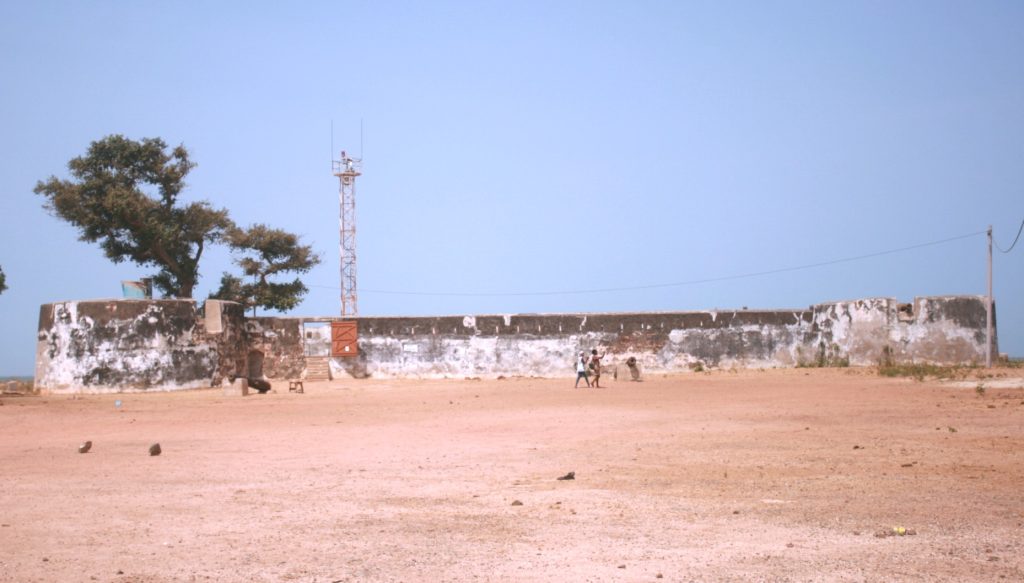
Among them is Niumi, a historic kingdom in what is today the North Bank Region, whose strategic location at the mouth of the River Gambia brought it into early and sustained contact with European traders, explorers and colonial powers.
Niumi’s story is particularly fascinating because of its unusual system of kingship, a rotating monarchy shared among three major royal families and drawn from seven specific villages.
The kingdom’s history, according to historian Hassoum Ceesay, can be traced to the expansion of Manding-speaking peoples following the emergence of the Mali Empire in the 13th century.
The Sonko Connection
According to Ceesay, Amari Sonko, a general under Sundiata Keita, the founder of the Mali Empire, led warriors westward towards the Gambia Valley as part of the expansion of the Manding Empire. Amari Sonko eventually reached the territories around Baddibu and Barra, near the mouth of the River Gambia.
There, according to the historical account, he established a Sonko dynasty which became one of the principal royal lineages of Niumi. “In pre-colonial Gambia, we had kingdoms and states which were headed by monarchs, kings or queens with absolute power. Niumi was just one of them, and it had a very interesting system of kingship,” Ceesay explained.
Unlike a conventional hereditary monarchy in which power passes directly from father to son, Niumi developed a system in which kingship rotated among recognised royal families.
Three Royal Families, Seven Villages
According to Ceesay, the kingship of Niumi rotated among three principal families: the Mannehs, Jammehs and Sonkos. “Kingship in Niumi was on a rotational basis, whereby the kingship passed through three major ruling families known as the Mannehs, Jammehs and Sonkos,” he said. Historical records of Niumi’s rulers from several centuries before the 1890s show kings bearing the surnames Jammeh, Manneh and, most frequently, Sonko.
The rotational system, Ceesay explained, helped distribute political authority among the different communities that made up the kingdom. But the right to occupy the throne was even more specifically defined.
According to him, Niumi’s monarchs could come only from seven recognised royal houses or villages:
Bakkendik: the Jammeh royal house, traditionally regarded as the original royal house of the queens;
Essau Manserring Su: the Sonko royal house;
Berending: the Sonko royal house;
Kanuma: the Manneh royal house;
Sitanunku: the Jammeh royal house;
Essau Jelenkunda: the Sonko royal house; and
Bunyadu — the Manneh royal house.
“These villages and towns are all situated in what is today called Niumi, in the Upper and Lower Niumi districts of the North Bank Region,” Ceesay explained.
This arrangement gave Niumi a distinctive political structure in which royal authority was not concentrated permanently in one family or one settlement.
When Queens Ruled Niumi
Perhaps one of the most remarkable aspects of Niumi’s history is the role played by women in its monarchy. According to Ceesay, the earliest ruling authority was vested in queens. At some point, however, men challenged this arrangement and eventually assumed greater political power.
“The queens had to select husbands from among the Manneh and Sonko families, as well as from their own Jammeh house. Therefore, men from all three families claimed the right to rule,” he explained.
Niumi subsequently produced a remarkable succession of female rulers known as Mama Mansas. According to Ceesay, 12 women ruled Niumi for a combined period of about 122 years.
“The Mama Mansas were the longest-ruling monarchs in Niumi, and their reign was a watershed in terms of the development and consolidation of the state,” he said. Although they did not rule consecutively, the female monarchs came from the three royal lineages represented among the seven recognised royal villages.
Their history, Ceesay said, provides evidence of a matriarchal tradition within Niumi that survived for more than a century. For modern visitors, this aspect of Niumi’s history offers an important reminder that the political history of the region cannot simply be understood through the stories of male rulers.
A Kingdom At The Gateway Of The River
Niumi’s geographical position was one of the reasons it became particularly important. Situated close to the mouth of the River Gambia, the kingdom occupied a strategic position along one of West Africa’s important waterways.
European merchants, explorers and traders sailing into the River Gambia inevitably encountered Niumi. As a result, the kingdom’s rulers had direct dealings with Europeans much earlier and more frequently than many rulers further inland.
“Niumi kings were among the kings in this region who had the most direct contact with Europeans by virtue of the location of their state at the mouth of the River Gambia,” Ceesay said. “Europeans had to deal with them one way or another, and for any passage, you had to pay a royalty.”
The collection of royalties and taxes from those moving through the kingdom became an important source of royal authority and revenue. This early contact also created another legacy: Europeans documented Niumi extensively.
Why Niumi Appears So Prominently In History
Hassoum Ceesay believes Niumi’s prominence in historical literature is partly a result of its geographical location. “Niumi Dynasty is not more popular than other traditional rulers in other parts of the country,” he explained. “It is just that Niumi was more exposed to Europeans by location, as it is not in the interior part of the country.”
European traders, travellers and colonial officials produced records, diaries and reports about their encounters with the kingdom. Consequently, researchers today have relatively extensive written material about Niumi compared with some of the inland states such as Fulladu, Tumana, Niani and Kiang. This does not necessarily mean that Niumi was more powerful or more important than all other pre-colonial states. Rather, its position at the gateway to the River Gambia meant that European observers encountered it more frequently and recorded more about it.
More Than Ceremonial Kings
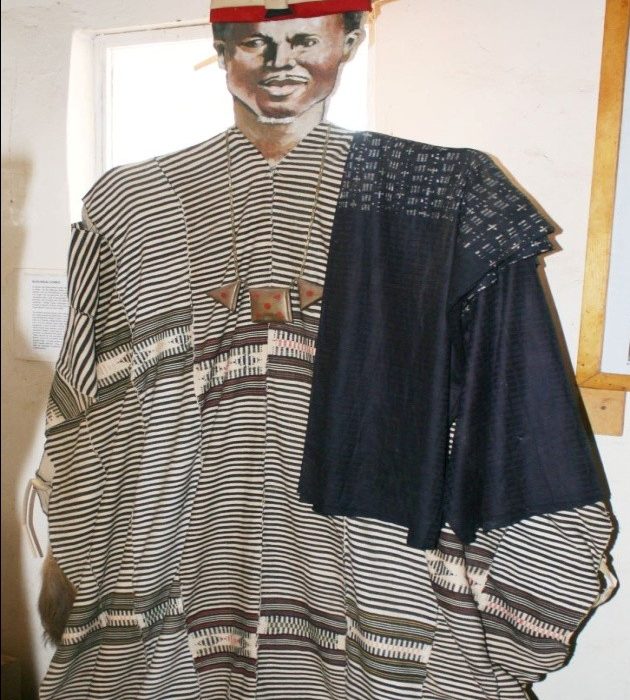
The traditional rulers of Niumi were not merely ceremonial figures. According to Ceesay, pre-colonial kings exercised substantial political, military, and spiritual authority.
“They didn’t rule with a small head but with political power, supernatural power, juju power, which all combined and made them powerful kings, effective rulers and long-lasting monarchs,” he said. Traditional rulers were responsible for settling local disputes, administering their territories, protecting their people, and defending their lands.
They also exercised authority over taxation and other aspects of governance. The kingdom maintained its own political and military structures, including armies and councils of elders that advised the monarch. In many respects, these structures performed functions comparable to institutions of modern government.
Armies, Taxes And Councils
The existence of organised armies was particularly important in the defence of these pre-colonial states.
The historian noted that Niumi resisted British expansion on several occasions, including fighting around Barra. He also pointed to other resistance movements across the country, including the campaigns of Foday Sillah in Kombo and Alfa Molo in Fulladu during the late 19th century. “These states had their armies, tax collection systems, councils of elders like a parliament, and so on,” Ceesay said.
“We had all the sovereign structures which the British destroyed when they declared the Protectorate in 1889.” The transition from independent kingdoms and states to British colonial rule therefore represented much more than a change of flag or administration. It fundamentally altered the political systems that had governed communities for generations.
A Kingdom Before Colonialism
The story of Niumi is ultimately part of a much larger story about The Gambia before colonial rule. Long before European colonial administration, communities across the territory had established their own systems of governance, taxation, justice, defence and social organisation. Kings and queens were not simply traditional symbols. They were political authorities who governed territories, settled disputes, commanded armies and maintained relationships with neighbouring states and foreign traders.
Niumi’s rotating kingship makes its history particularly distinctive. The idea that royal authority could circulate among three families and seven recognised villages suggests a political system designed, at least in part, to balance competing centres of power. Its history also demonstrates the important role women played in pre-colonial governance through the reigns of the Mama Mansas.
Discovering Niumi Today
For today’s cultural traveller, Niumi offers an opportunity to explore a side of The Gambia that lies beyond the country’s popular coastal tourism experience. Its villages, royal traditions, oral histories and relationship with the River Gambia form part of a cultural landscape that can help visitors understand how Gambian societies were organised before colonial rule.
The story of Niumi can also be connected to the broader heritage of the North Bank Region, including historic settlements, traditional communities, river landscapes and sites associated with the country’s long interaction with West African kingdoms and European traders.
A journey through Niumi is therefore not simply a trip into the countryside. It is a journey into the political memory of a kingdom that once controlled an important gateway to the River Gambia.
The Legacy of the Niumi Kings
Today, the royal institutions of pre-colonial Niumi no longer exercise the sovereign powers they once possessed. But their legacy remains embedded in family histories, village identities, oral traditions and the cultural landscape of the North Bank. The names of the royal families, Manneh, Jammeh and Sonko continue to evoke a history that stretches back centuries.
And the seven villages associated with the Niumi throne remain important markers in understanding the kingdom’s political geography. For visitors interested in culture, history, and heritage, Niumi offers an especially rich story: a kingdom shaped by Manding expansion, governed through a distinctive rotating monarchy, ruled at different times by both women and men, and positioned at a strategic crossroads where African kingdoms and European traders met.
It is a story of power, tradition, resistance, and adaptation. And perhaps most importantly, it reminds us that long before colonial boundaries were drawn across the map, the communities of what is now The Gambia had their own kingdoms, their own institutions, and their own ways of governing themselves.
Niumi was one of them, and its royal legacy remains an important part of the country’s cultural heritage.